Drone Swarm Communication over TDMA MANET and Satellite
Overview
This simulation models a tactical drone swarm communication system with TDMA-based MANET radios and satellite links. Each drone has two communication interfaces: one for MANET connectivity over the C-band, and one for satellite communication over the X-band. The scenario represents a real-world military setup, in which communication occurs on both interfaces at the same time.
The central command server transmits Command & Control (C2) data to all drones through the satellite link at 25 kbps. Each drone sends Telemetry and Status Reports to the server every 3 seconds at 50 kbps, also through the satellite link. At the same time, the drones exchange Intra-swarm Coordination data over the TDMA-based MANET, on direct or multi-hop paths.
The drones follow predefined mobility paths, and the network updates the MANET routes automatically to keep the drones connected. We analyze the end-to-end latency and throughput as mobility changes the topology.
Network Scenario
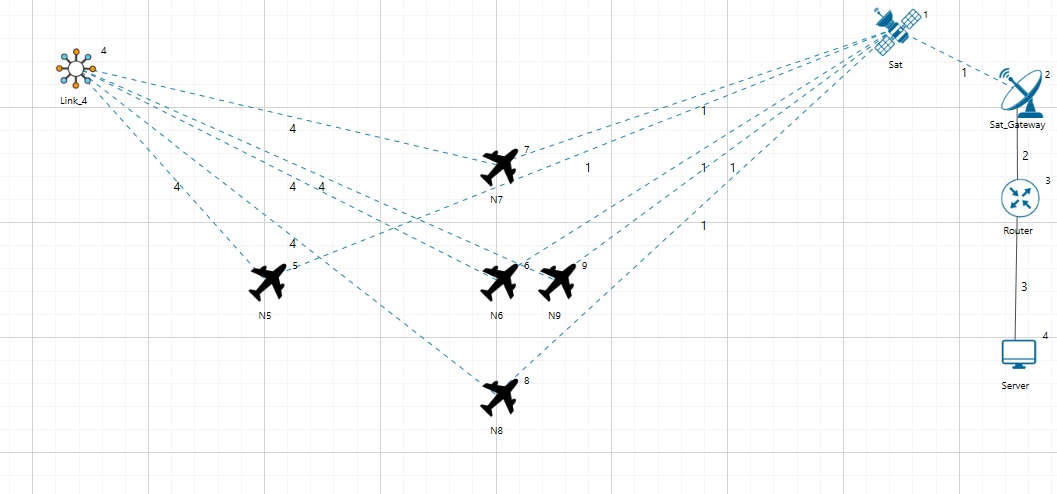
Figure 1: 5 drones, 1 satellite, 1 satellite gateway, 1 server. Each drone has a TDMA radio interface and a satellite interface. Link-4 is a logical TDMA ad hoc link.
Network Setup
- Communication Range: 150 km for TDMA radios
- Network: 5 drones, 1 satellite, 1 Gateway, 1 Central Server
- X-Band Satellite Communication
- The server transmits Command & Control (C2) data to the drones at 25 kbps through the satellite link.
- The drones transmit Telemetry & Status Reports to the server at 50 kbps, every 3 seconds, through the satellite link.
- Forward and return satellite communication use the X-band.
- C-Band MANET communication
- Node N1 transmits Intra-swarm Coordination data to Node N5 at 10 kbps over the TDMA link.
- Drone Communication Range (MANET): 150 km.
- TDMA-based MANET communication uses the C-band.
- Drone Mobility Configuration
- N5 and N9 move northeast at 0.4 m/s and 0.9 m/s.
- N7 and N8 move east at 0.4 m/s and 0.9 m/s.
- N6 moves southwest at 0.4 m/s.
- Mobility Configuration: File-based mobility for predefined flight path
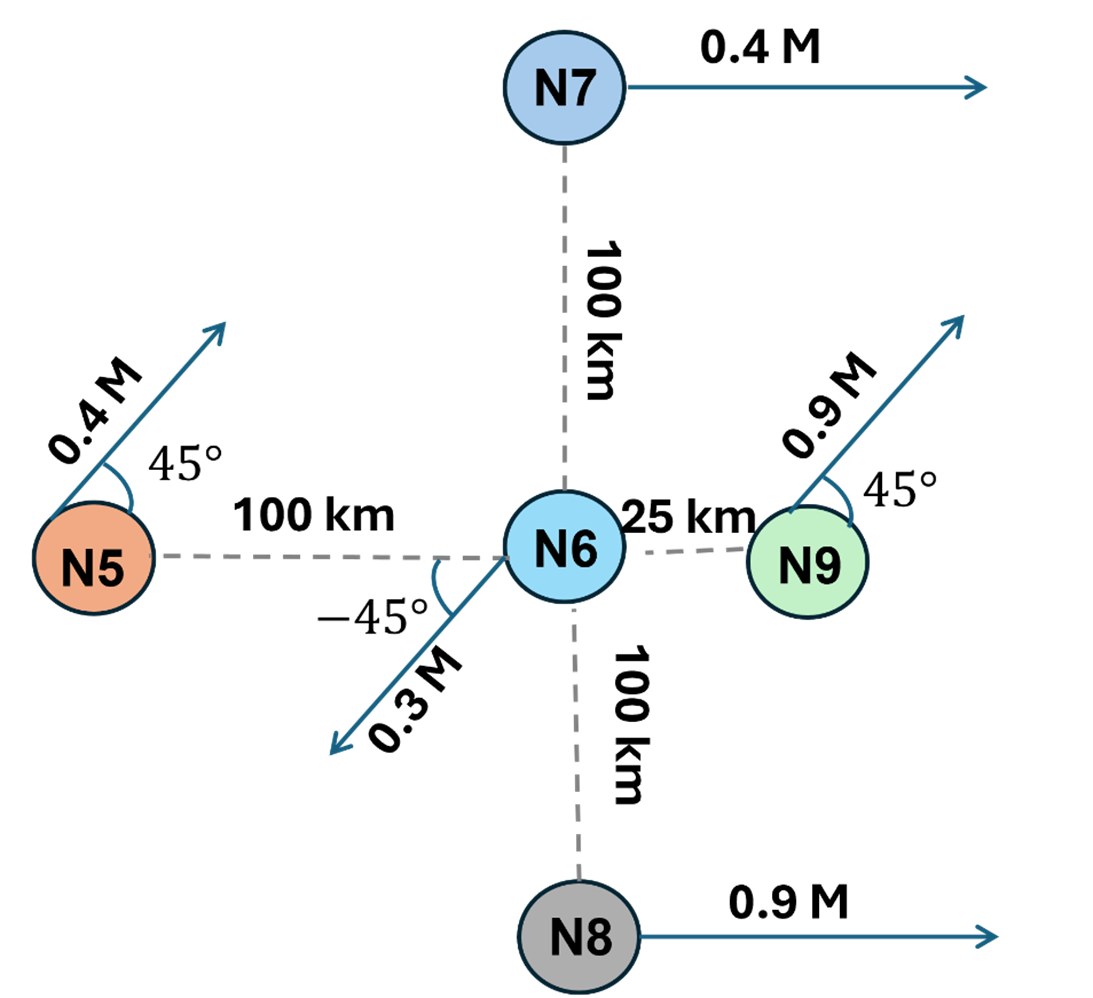
Figure 2: Initial Position and Velocities. NetSim assumes that nodes have appropriate Doppler compensation mechanisms
Routing Transitions Due to Mobility
| Time Interval | Communincation Path | Type |
|---|---|---|
| 0s – 191s | N5 > N9 | Direct |
| 198s – 318s | N5 > N6 > N9 | Multi-hop |
| 324s – 900s | N5 > N7 > N9 | Multi-hop |
Table 1: Time Intervals and Routing Paths Between N5 and N9
System Parameters: Satellite
| Parameter | Value |
|---|---|
| Satellite Type | GEO |
| Modulation | QPSK |
| Coding Rate | 3/4 |
| Frequency (GHz) | 7.9 for forward, 7.25 for return |
| Bandwidth (MHz) | 1 |
| Roll of Factor | 1 |
| Spacing Factor | 1 |
| Symbol per slot | 90 |
| Pilot block size (Symbols) | 36 |
| Slot count in frame | 360 |
| Pilot header (Slots) | 1 |
| Pathloss model | Friis free space |
Table 2: Satellite System Parameters
System parameters: MANET
| Parameter | Value |
|---|---|
| Routing protocol | OLSRv1-RFC 3626 |
| Slot allocation | Round robin |
| Bandwidth (KHz) | 20 |
| Data Symbol Rate (Kbd) | 1000 |
| Pathloss model | Range based |
| Range (km) | 150 |
| Transmit power (W) | 20 |
| Modulation | QPSK |
| Coding Rate | 1/2 |
Table 3: MANET System Parameters
Understanding the multi-hop Routes taken through Animation
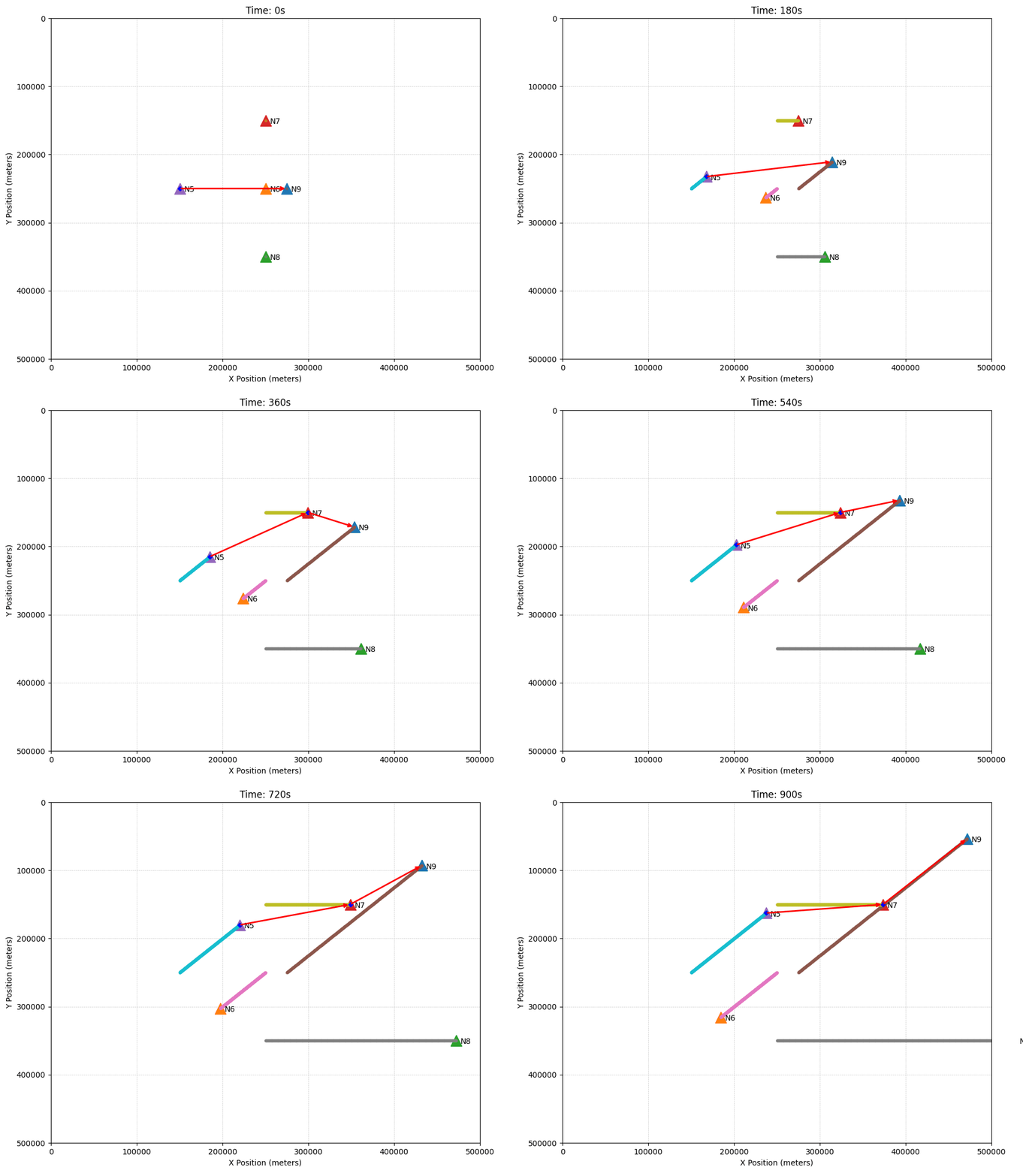
Animation
Results
On analysing NetSim’s packet trace log file we observe the multi-hop routes as shown in the table below:- 0s to 191s: Direct communication (N5 → N9)
- 198s to 318s: Multi-hop communication (N5 → N6 → N9)
- 324s to 900s: Multi-hop communication (N5 → N7 → N9)
Throughput vs Time
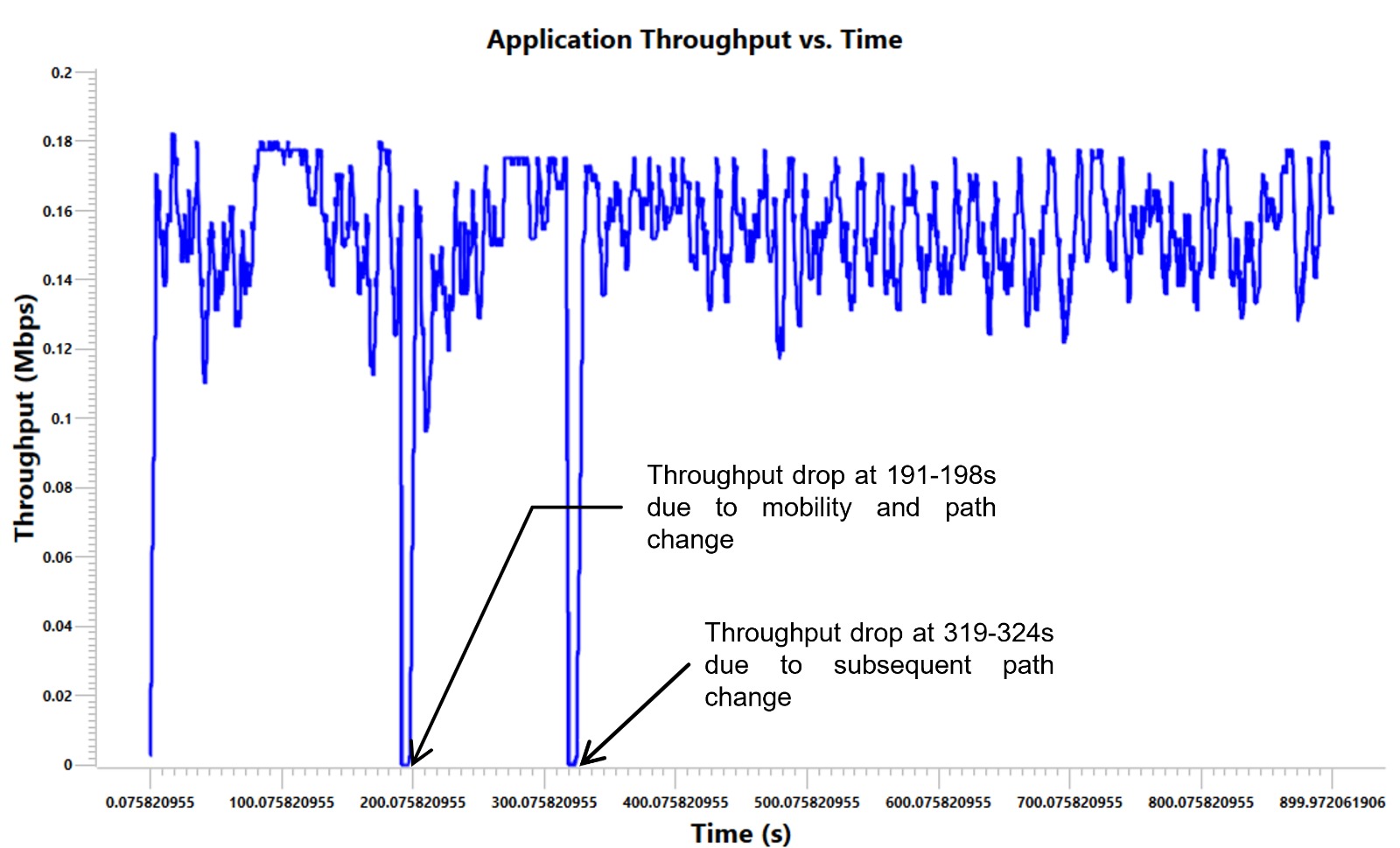
Figure 3: Throughput remains stable initially due to direct communication. A drop occurs at 191-198s because of mobility and a path change. Another drop occurs at 319-324s because of a second path change.
Latency vs Time
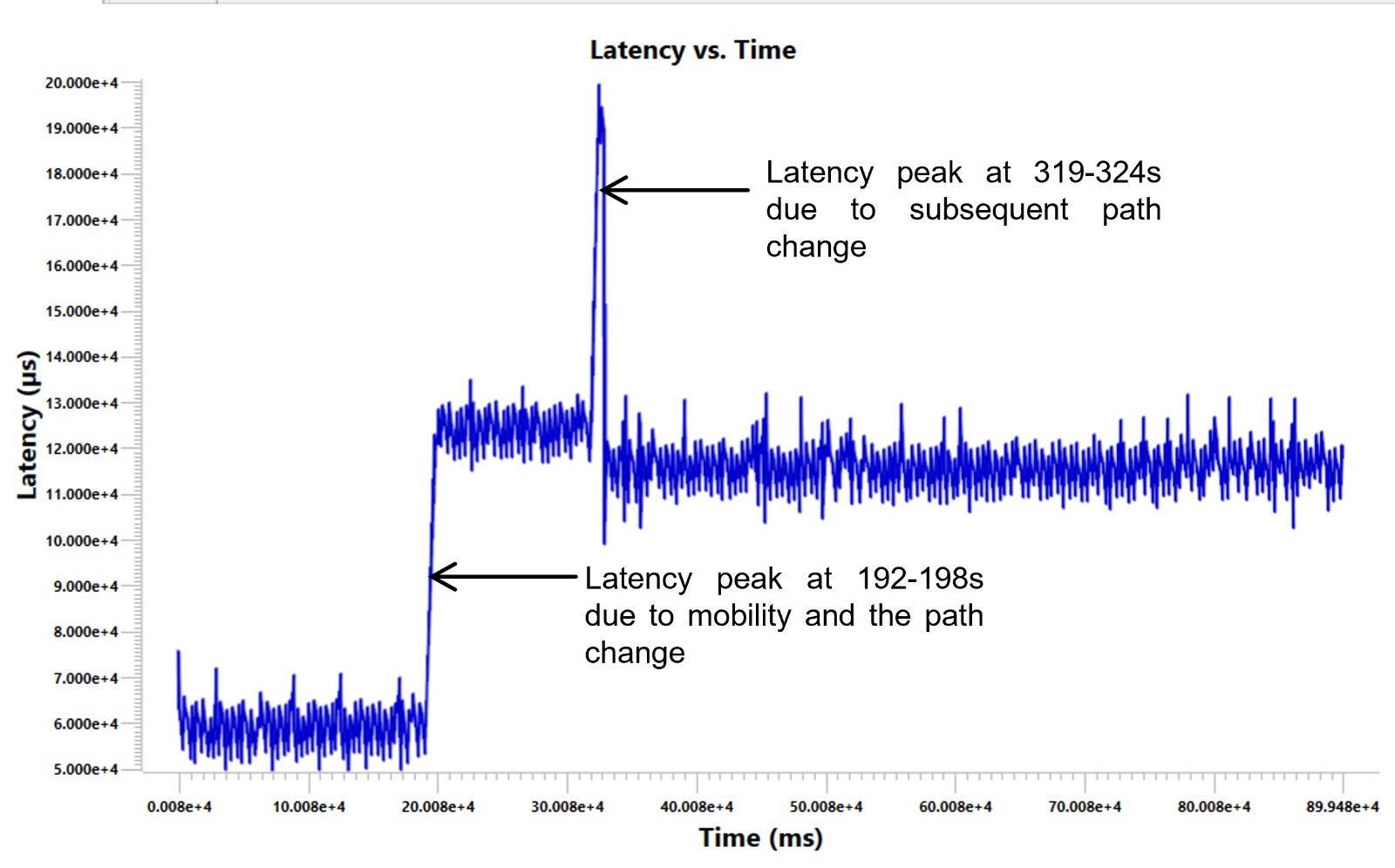
Figure 4: Low latency initially due to direct communication (up to 190s). A latency peak occurs at 191-198s because of mobility and a path change. Another peak occurs at 319-324s because of a second path change. Latency remains higher afterward due to multi-hop communication.
Satellite communication: Latency. QPSK vs QAM
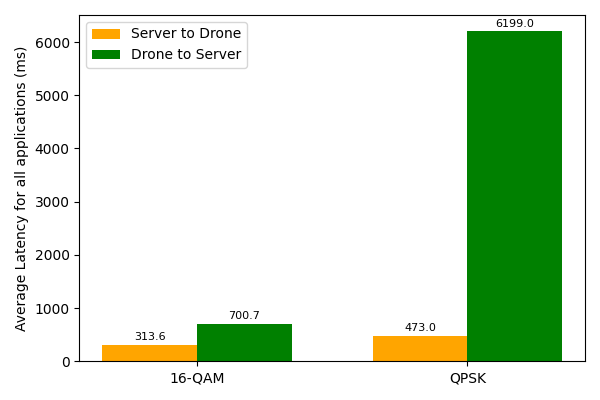
Figure 5: Average latency for the QPSK is greater than the average latency of 16-QAM.
The simulation results show that 16-QAM gives a much lower average latency than QPSK, especially in the Drone-to-Server direction. With 16-QAM, the average latency meets the target of less than 1 second (1000 ms). The overall mean latency is 700.68 ms across five applications, so 16-QAM is suitable for time-sensitive telemetry from drones.